NASA's James Webb Telescope Reveals Hidden Stars And Powerful Jets In A Distant Cosmic Nursery
NASA's James Webb Telescope reveals hidden stars and powerful jets in NGC 7129, offering a remarkable new view of how stars are born.
A cloud of cosmic dust can hide an extraordinary amount of activity. Thousands of light years from Earth, young stars are forming inside dense clouds of gas, sending powerful streams of material into their surroundings. For decades, much of this activity remained difficult to observe. Now, NASA's James Webb Space Telescope has provided a clearer view of this remarkable process.
On October 6, 2026, NASA released new imagery of NGC 7129, a stellar nursery located approximately 3,300 light years from Earth. The observations reveal numerous young stars previously concealed by thick clouds of dust, along with striking jets and complex structures of glowing gas. The images offer scientists another opportunity to examine the conditions that shape stars during their earliest stages.
NASA's James Webb Telescope Reveals A Hidden Stellar Nursery
NGC 7129 is a region where new stars are forming within large concentrations of gas and dust. These environments are important to astronomers because they provide a natural setting for studying how stars develop before becoming fully established objects.
The difficulty is that the same material responsible for forming stars can also conceal them. Dense clouds block much of the visible light emitted by young stars, limiting what conventional optical observations can reveal.
NASA's James Webb Space Telescope addresses this challenge through its advanced infrared instruments. Infrared observations allow astronomers to detect structures and objects that may remain hidden in visible light.
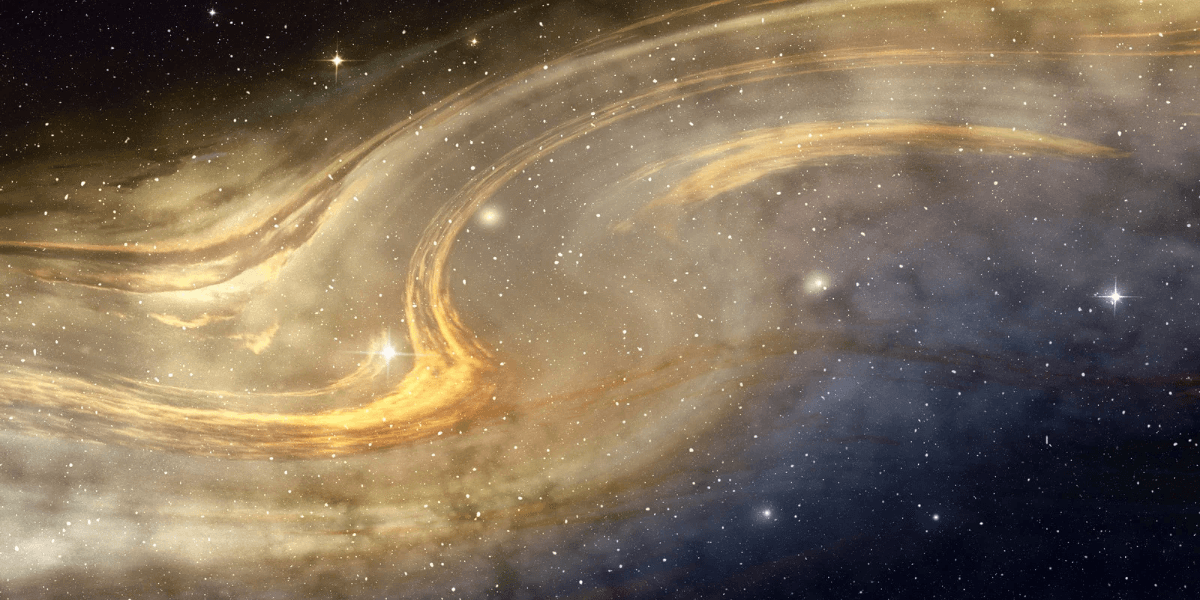
The newly released image reveals a busy environment filled with young stars, glowing hydrogen, and intricate clouds of material. Rather than appearing as a quiet region of space, NGC 7129 emerges as an active setting where stellar formation is transforming the surrounding environment.
Powerful Stellar Jets Reveal How Young Stars Develop
Among the most interesting features of the observations are the jets associated with developing stars.
Young stars can release narrow streams of material as they gather gas from their surroundings. These outflows interact with nearby clouds, creating structures that help astronomers understand the physical processes occurring during stellar formation.
The Webb observations distinguish regions containing hot atomic hydrogen from areas where cooler molecular hydrogen has been disturbed by activity around developing stars.
In the published image, different colors represent emissions captured through infrared filters. Golden regions highlight hot atomic hydrogen, while red structures trace molecular hydrogen affected by energetic activity.
These details are scientifically valuable because they help researchers identify where young stars are influencing nearby material.
Studying these interactions can improve understanding of how stars accumulate mass, release energy, and eventually emerge from the clouds in which they formed.
Why The James Webb Telescope Provides A Clearer View
NASA's earlier Spitzer Space Telescope also observed NGC 7129, providing important information about the region's gas and dust.
However, Webb's greater imaging resolution reveals finer structures that were less apparent in the earlier observations.
The comparison demonstrates how advances in telescope technology can expand scientific knowledge without requiring researchers to visit distant objects.
Webb can distinguish more detailed filaments of gas and dust while revealing additional stars and distant background galaxies.
This improved view gives astronomers more information about the distribution of material within the nebula.
It also highlights the importance of observing the same celestial region with different instruments. Earlier missions establish a foundation, while newer technology can reveal details that were previously beyond reach.
What The Discovery Means For Understanding The Universe
Star formation is one of the fundamental processes responsible for shaping galaxies.
Stars produce energy, influence nearby gas, and contribute to the chemical evolution of the universe. Over their lifetimes, many stars also create and distribute elements that become part of future generations of stars and planetary systems.
Understanding their earliest development therefore helps scientists investigate larger questions about the history of galaxies and the origins of planetary environments.
The observations of NGC 7129 do not establish the discovery of life or a new planetary system. Instead, they provide detailed evidence of the conditions and interactions associated with stellar birth.
That distinction matters because scientific progress often develops through increasingly precise observations rather than a single dramatic breakthrough.
Each improvement in imaging helps researchers refine existing models, investigate unanswered questions, and identify promising targets for future study.
Why NASA's Latest Space Discovery Matters To Everyday Readers
Although NGC 7129 is thousands of light years away, the technology used to study it demonstrates the value of advanced engineering and scientific collaboration.
The James Webb Space Telescope is an international project involving NASA, the European Space Agency, and the Canadian Space Agency.
Its instruments allow researchers to investigate distant galaxies, stellar environments, and planetary systems with a level of detail unavailable to many earlier observatories.
For technology enthusiasts, the latest release demonstrates how infrared sensors, precision optics, and sophisticated data processing can turn faint signals from distant space into useful scientific information.
For anyone interested in exploration, it offers another example of how modern technology continues to expand humanity's understanding of the universe.
A New Perspective On The Birth Of Stars
The October 6 release is significant because it makes the complex process of star formation easier to examine and understand.
NGC 7129 is not simply a beautiful collection of glowing clouds. It is an active stellar environment where gravity, gas, dust, and energetic outflows interact as young stars develop.
Webb's observations provide researchers with a more detailed picture of those processes while demonstrating the continuing scientific value of infrared astronomy.
Readers interested in the original findings can explore NASA's official James Webb Space Telescope coverage and compare the new observations with earlier images from the Spitzer mission.
As astronomers continue studying distant stellar nurseries, discoveries like this one help explain how stars emerge from darkness and begin shaping the galaxies around them.

Men's Reporter Contributor
This article features partner, contributor, or branded content from a third party. Members of the Men's Reporter editorial staff were not involved in the creation of this content. All views and opinions are those of the contributor alone.