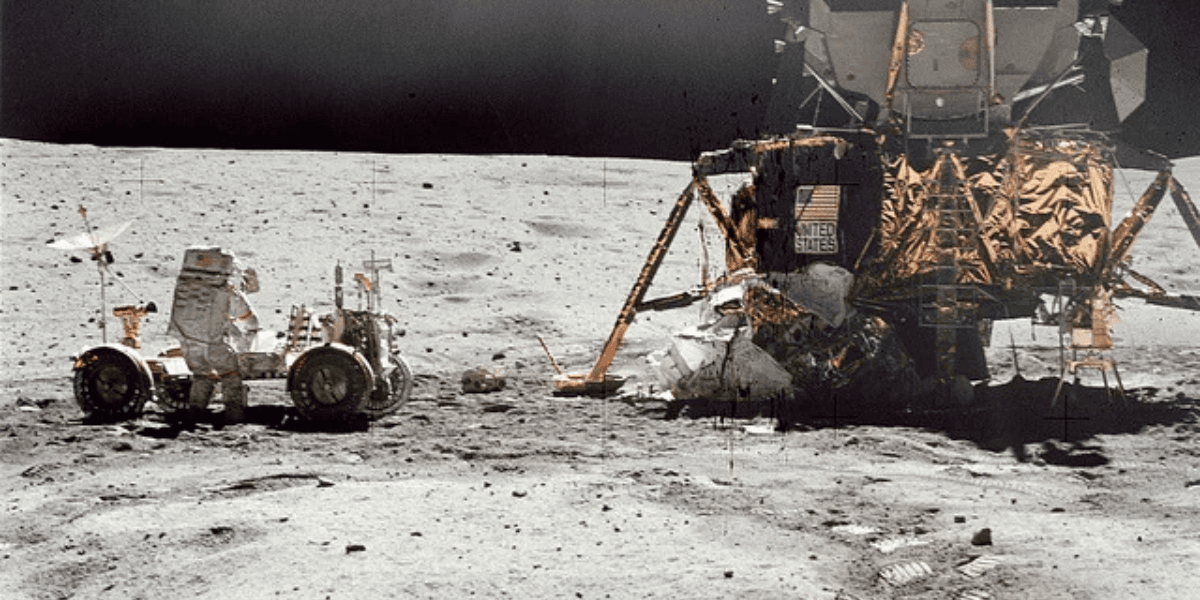
NASA Reveals New Artemis Plan For 2028 Moon Landing
NASA outlines its updated Artemis mission strategy, advancing spacecraft testing, astronaut safety, and preparations for a historic lunar return.
The next American Moon landing is moving closer, but NASA faces a challenge that goes far beyond launching astronauts into space. Before humans can safely walk on the lunar surface again, engineers must prove that several complex spacecraft can operate together. On November 4, 2026, NASA published an important update outlining its strategy to achieve that goal, including new mission tests, redesigned landing systems, and a target of returning astronauts to the Moon in 2028.
The announcement builds on an October 23 briefing led by NASA Administrator Jared Isaacman and other agency officials. The updated Artemis program will prioritize a major test mission in 2027 before attempting a crewed lunar landing in 2028. This approach reflects NASA's effort to reduce technical risks while preparing for sustained exploration beyond Earth.
NASA Artemis Moon Landing Plans Enter A Critical Phase
NASA's Artemis program represents the United States' effort to return astronauts to the Moon for the first time since Apollo 17 in 1972. Unlike the Apollo missions, which focused on individual expeditions, Artemis aims to establish the capabilities needed for repeated lunar visits and longer scientific operations.
The updated schedule places Artemis III in 2027 as a demonstration mission in low Earth orbit. Four astronauts will travel aboard NASA's Orion spacecraft, launched by the Space Launch System rocket, for a planned 14 day mission. Rather than landing on the Moon, the crew will test docking procedures and spacecraft operations involving lunar lander vehicles developed by SpaceX and Blue Origin.
These tests are essential because future astronauts must transfer safely between Orion and a separate landing spacecraft. NASA intends to examine those operations closer to Earth, where mission teams can evaluate performance before attempting more demanding lunar missions.
A New Approach To Spacecraft Testing And Safety
One of the most significant developments involves NASA's decision to test two commercial landing systems during Artemis III.
Under the announced sequence, Blue Origin will launch a Blue Moon lander test vehicle into Earth orbit. Orion will subsequently launch with its crew and dock with that vehicle. SpaceX will then launch a Starship lander test vehicle, allowing Orion to undock from Blue Moon and conduct another docking operation.
This plan gives NASA an opportunity to evaluate different spacecraft interfaces and operational procedures before sending astronauts toward the Moon.
The agency also reported improvements in spacecraft preparation. Processing timelines for Artemis III hardware have been reduced by approximately half. NASA engineers additionally redesigned and tested a critical fuel line component in five months, at substantially less cost than an earlier external estimate.
These developments suggest progress in engineering efficiency, although successful testing remains necessary before the systems can be considered ready for lunar operations.
Artemis IV Targets A Historic Return In 2028
The next major milestone is Artemis IV, currently targeted for 2028.
NASA plans to launch astronauts aboard Orion from Kennedy Space Center in Florida. The mission will use a commercial landing system to transport crew members to the lunar surface.
SpaceX and Blue Origin are developing separate approaches to support that objective. SpaceX's proposed mission involves refueling Starship in Earth orbit, while Blue Origin's architecture uses transfer stages to transport its Blue Moon lander toward lunar orbit.
Both companies are targeting readiness for a crewed landing in 2028. However, these remain development goals rather than completed achievements.
NASA is also examining two options for the upper stage of its Space Launch System rocket, providing flexibility as engineers finalize mission requirements.
Another important development concerns astronaut equipment. NASA and Axiom Space plan to develop a lighter spacesuit called the Sortie suit for initial lunar surface activities. The proposed design weighs approximately half as much as the company's larger suit, which is intended for more demanding future missions.
Why The NASA Artemis Moon Landing Matters
The significance of Artemis extends beyond the achievement of placing astronauts on another celestial body.
NASA intends to conduct increasingly complex missions near the lunar South Pole, an area of considerable scientific interest. Repeated exploration could help researchers better understand lunar geology, surface conditions, and the resources available for future missions.
The program also provides opportunities to develop technologies involving spacecraft navigation, advanced materials, robotics, and life support systems.
For American aerospace engineers and technology enthusiasts, Artemis offers a practical example of how ambitious scientific goals depend on careful testing, manufacturing improvements, and cooperation between government agencies and private companies.
However, the November 4 update does not mean a Moon landing is guaranteed in 2028. Spacecraft development, integrated testing, and crew safety assessments will remain decisive factors in determining the final schedule.
What Happens Next For NASA And Artemis?
The immediate priority is preparing Artemis III for its planned 2027 demonstration. Successful docking tests would provide important evidence supporting the subsequent lunar landing attempt.
Meanwhile, NASA and its commercial partners must continue developing landing vehicles, spacesuits, and mission systems capable of operating in the demanding environment around the Moon.
For readers following the future of American space exploration, three developments deserve particular attention: the readiness of the Artemis III spacecraft, progress in commercial lunar lander testing, and NASA's confirmation of the Artemis IV launch schedule.
The November 4 announcement marks a meaningful planning milestone, not a completed mission. Its importance lies in establishing a clearer sequence of tests intended to make the next human Moon landing possible.
The next chapter of lunar exploration will depend not simply on reaching the Moon, but on proving that astronauts can return safely and that future missions can build on what they accomplish.

Men's Reporter Contributor
This article features partner, contributor, or branded content from a third party. Members of the Men's Reporter editorial staff were not involved in the creation of this content. All views and opinions are those of the contributor alone.