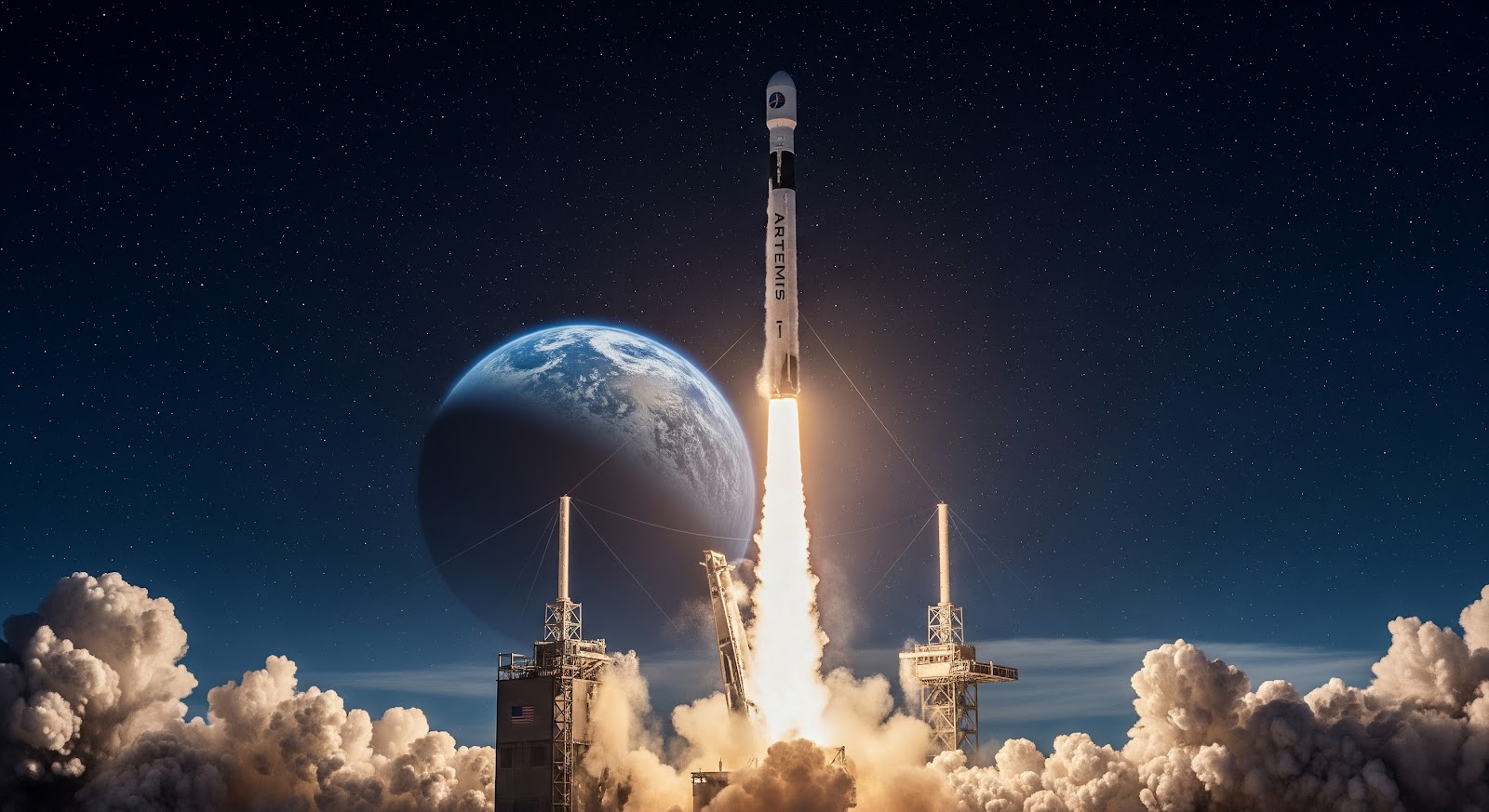
Kennedy Space Center, FL, USA — NASA successfully completed the first full-scale test of its Artemis I mega rocket, marking a significant milestone in the agency’s plans to return humans to the Moon by the mid-2020s. The test took place at the Kennedy Space Center in Florida, where engineers tested the Space Launch System (SLS) rocket’s engines and performance capabilities.
The Artemis I mission, which is part of NASA’s Artemis program, is designed to send astronauts back to the Moon and ultimately to Mars. The mega rocket is the most powerful vehicle NASA has ever built, with the ability to lift large payloads into space and carry humans to distant destinations. The test included the ignition of the rocket’s engines, simulating the launch and ensuring that the rocket would be ready for the upcoming Artemis I uncrewed mission.
Bill Nelson, NASA Administrator, celebrated the success of the test, stating, “Today marks a historic achievement for NASA and the space industry. The Artemis I test launch brings us one step closer to sending astronauts to the Moon and beyond. This is a triumph of science, engineering, and the human spirit.”
The Artemis I rocket is equipped with advanced propulsion systems that allow it to carry the Orion spacecraft—designed for deep space exploration—into orbit. This mission will serve as a precursor for future crewed missions, including the historic Artemis II mission, which will send astronauts on a flight around the Moon. The successful test also underscores NASA’s renewed focus on space exploration and its efforts to secure the United States’ leadership in space for generations to come.
With Artemis I now ready for its uncrewed mission, NASA is poised to make history once again as the first space agency to return astronauts to the Moon in over five decades. This successful test represents the culmination of years of planning, engineering, and collaboration with industry partners like Lockheed Martin, and sets the stage for the next era of human exploration.